Few artists in modern country music have managed to build a career as enduring and impactful as Kenny Chesney. Over the course of three decades, he has transformed from a small-town Tennessee dreamer into one of the best-selling country artists of all time, selling more than 30 million albums worldwide and consistently packing stadiums that most musicians only dream of filling.
But what is it that separates Chesney from the countless other artists who have tried and failed to achieve similar success? The answer lies in a combination of authentic songwriting, shrewd artistic evolution, and an unmatched ability to connect with everyday audiences on a deeply personal level.
This analysis takes a comprehensive look at the life, music, and cultural footprint of Kenny Chesney. From his humble beginnings in Luttrell, Tennessee, through his chart-dominating discography, to the lasting legacy he continues to build today, readers will gain a thorough understanding of why Chesney remains one of country music's most significant and beloved figures.
Kenneth Arnold Chesney (born March 26, 1968, Knoxville, Tennessee; raised Luttrell, TN) is an American country singer-songwriter and guitarist who has sold more than 30 million albums globally, earned 12 CMA Awards including four consecutive Entertainer of the Year honors, and was inducted into the Country Music Hall of Fame on October 19, 2025. According to Britannica, Chesney is widely regarded as one of country music's most successful live performers of the modern era.
Chesney's voice is warm, slightly raspy, and conversational. He is known for emotional clarity and precise phrasing rather than technical showmanship, a quality that makes his storytelling immediately accessible across country, pop, and rock audiences alike. In reflective ballads such as "Don't Blink" and "You and Tequila," Chesney sounds vulnerable and measured; in up-tempo cuts like "Summertime" and "American Kids," he projects genuine energy without sacrificing his natural, relaxed delivery.
His catalog centers on love, small-town memory, summer freedom, and the quiet weight of passing time. Chesney frequently layers those themes over coastal and reggae-influenced rhythms, giving mainstream country radio a distinctly sun-soaked texture that sets him apart from his peers. At his 2025 Hall of Fame induction ceremony, Chesney captured this identity precisely: "This dream has allowed me to chase the sun in a bus down the highways. It has allowed me to sit on the bow of boats and chase the sun in the islands."
Kenneth Arnold Chesney was born on March 26, 1968, at St. Mary's Medical Center in Knoxville, Tennessee, and raised in Luttrell, a small Appalachian community roughly 25 miles northeast of Knoxville. Luttrell carries its own musical significance as the birthplace of guitar legend Chet Atkins, a detail that speaks to the region's deep roots in American vernacular music. Growing up in that environment, surrounded by working-class neighbors and the rhythms of rural Tennessee life, gave Chesney the raw material for a career built on small-town memory and plainspoken emotional honesty.
Before music claimed his attention, Chesney was primarily an athlete. He played football and baseball at Gibbs High School in Corryton, Tennessee, graduating in 1986. His earliest musical formation happened not through instruments but through listening and singing; he joined a high school choir, where a supportive director cultivated his sensitivity to melody and vocal harmony. That foundation in melody-first thinking would prove lasting.
Chesney enrolled at East Tennessee State University in Johnson City in 1986, initially pursuing business studies. On Christmas Day of his sophomore year, he received his first guitar as a gift, a six-string he quickly nicknamed "The Terminor." He was immediately obsessed, teaching himself to play by working through the Eagles' "Tequila Sunrise." This relatively late instrumental start is significant: because his ear and vocal instincts were already developed before his fingers were, melody and lyric became his primary compositional tools rather than instrumental technique. His documented primary influences include Merle Haggard and George Jones, both masters of emotionally direct storytelling, as well as the country rock of Charlie Daniels.
At ETSU, Chesney joined the university's Bluegrass Program, deepening his connection to the Appalachian musical tradition he had absorbed growing up. He began performing at local clubs in Johnson City from 1987 onward, and in 1989 he recorded a self-released demo album at Classic Recording Studio in Bristol, Virginia, selling approximately 1,000 copies and using the proceeds to purchase a Martin guitar.
Chesney graduated from ETSU with a degree in advertising, a discipline centered on audience psychology and clear, immediate messaging. That training is visible throughout his career in his ability to craft verses that communicate across demographics with minimal friction.
After completing his advertising degree at East Tennessee State University in 1990, Kenny Chesney made the move to Nashville with little more than ambition and a guitar. He sustained himself through odd jobs, including parking cars, while working Nashville's honky-tonk circuit and refining the live performance instincts that would later make him one of country music's highest-grossing touring acts. This grassroots apprenticeship, playing small rooms night after night for crowds who could talk right through your set, built the stage presence and song sense that no classroom could provide. Notably, Chesney had already demonstrated an entrepreneurial streak before arriving in Nashville, self-releasing a demo album titled Good Old Boy At Heart in 1989 and selling roughly 1,000 copies at gigs to fund a new guitar.
The Opryland Deal and First Recording Contract
In 1992, Chesney secured a songwriting contract with Opryland Music Group, a pivotal early validation that positioned him as a songwriter first and a recording artist second. The publishing deal provided both steady income and the kind of professional credibility that opened doors in a city built on relationships. The following year, Chesney signed his first recording deal with Capricorn Records and released his debut studio album, In My Wildest Dreams, in 1994. The album generated two charting singles but failed to achieve national breakthrough, a trajectory typical of debut country records in that era.
BNA Records and the First Number-One Hit
When Capricorn's country operations wound down, Chesney signed with BNA Records in approximately 1995. He released All I Need to Know that same year, an album that produced Top Ten country singles including "All I Need to Know" and "Fall in Love," demonstrating his growing commercial viability. His third album, Me and You (1996), delivered what sources describe as his first number-one country hit with the title track, a song whose blend of romantic directness and melodic warmth established the emotional template Chesney would refine across the next three decades. Learn more about his full Kenny Chesney albums discography to trace how this early period laid the foundation for the commercial dominance that followed.
Breakthrough Era: Everywhere We Go to No Shoes (1999-2003)
By 1999, Kenny Chesney had spent the better part of a decade building toward a commercial tipping point. Everywhere We Go, his fifth studio album released that year on BNA Records, delivered it. The record's blend of romantic ballads and uptempo crowd-pleasers connected with country radio in a way his earlier releases had approached but never fully achieved, and the touring audiences who turned out for those singles began growing in size and loyalty.
The 2000 Greatest Hits compilation arrived at exactly the right moment, consolidating Chesney's catalog for listeners who had discovered him through radio but hadn't yet bought an album.
Then came the album that changed everything.
Released on April 23, 2002, No Shoes, No Shirt, No Problems was Chesney's sixth studio album, co-produced with Buddy Cannon and Norro Wilson for BNA Records. It debuted at number one on both the Billboard 200 and the Top Country Albums chart simultaneously, his first album to achieve that double. First-week sales reached 235,000 copies, and the album has since been certified five-times platinum by the RIAA as of July 2025, representing more than five million units shipped in the United States. The record spawned five singles on the Billboard Hot Country Songs chart: "Young" peaked at number two, "The Good Stuff" held the number one position for seven consecutive weeks, "Big Star" reached number two, the title track peaked at number two, and "Charlotte" charted at number seventeen.
The album's thematic architecture was as important as its commercial performance. Songs centered on escapism, coastal freedom, and the deliberate rejection of obligation, a set of values that Chesney embedded so consistently into his identity that critics began labeling his output "beach country" or "coastal country." This sun-soaked, island-inflected aesthetic crossed into pop and adult contemporary radio far more freely than traditional country fare, widening his audience beyond the genre's core listeners. Songwriter Casey Beathard co-wrote the title track, and the song's origin story, documented by The Tennessean, frames it as the catalyst for what that publication described as a "tidal wave in country music."
To understand how Chesney constructed that commercial dominance at the lyric level, explore the song meaning pages for "The Good Stuff," "Young," and "How Forever Feels" on MyBesh, where editorial analysis unpacks the specific language choices and structural decisions that made these tracks resonate so broadly.
Stadium-Era Dominance and Entertainer of the Year Streak (2004-2014)
The decade between 2004 and 2014 represents the commercial apex of Kenny Chesney's career, a period during which he transcended country music's traditional audience ceiling and established himself as one of the highest-grossing touring acts in all of popular music. Chesney's annual summer stadium tours regularly sold out NFL venues across the United States, with his total tour grosses competing directly against rock and pop headliners for top billing on industry revenue charts. His ability to fill 60,000-seat stadiums night after night placed him in a category previously occupied in country music only by Garth Brooks, a comparison that Nashville observers were making as early as 2004.
Award Dominance: CMA and ACM Recognition
Chesney's live dominance translated directly into industry recognition at the highest level. The Academy of Country Music awarded Chesney its Entertainer of the Year honor four consecutive times from 2005 through 2008, a confirmed unbroken streak that cemented his status as the decade's defining commercial force in country music. The Country Music Association also awarded Chesney multiple Entertainer of the Year honors during this period, with confirmed wins including 2004 and years in the 2006-2008 range. Across both organizations, Chesney accumulated 12 CMA Awards total, a body of recognition that the ACM Entertainer of the Year historical record situates squarely between Toby Keith's earlier dominance and the next generation of award winners who followed.
Studio Output and Thematic Expansion
Chesney matched his live success with a sustained run of studio albums that deepened his artistic identity without abandoning the coastal and storytelling themes that had built his audience. When the Sun Goes Down (2004) won the CMA Album of the Year and featured a duet with Uncle Kracker. Be as You Are (2005), an acoustic island-influenced collection reportedly recorded in the U.S. Virgin Islands, and The Road and the Radio (also 2005) extended his thematic range while keeping his commercial momentum intact. Just Who I Am: Poets and Pirates (2007), Lucky Old Sun (2008), and Hemingway's Whiskey (2010) each added literary and introspective textures to his catalog, demonstrating that Chesney's audience loyalty was built on substance as much as accessibility.
Personal Life and Later Era Albums
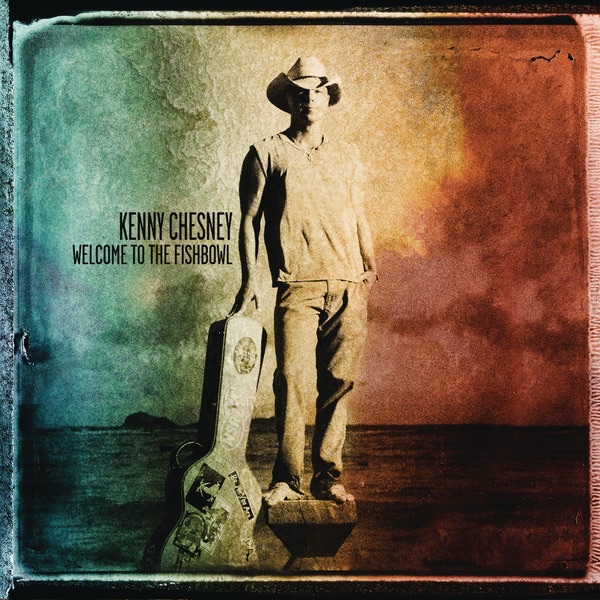
On May 9, 2005, Chesney married actress Renée Zellweger in a private ceremony in the U.S. Virgin Islands; the marriage ended approximately four months later. The personal episode did little to slow his professional momentum. Welcome to the Fishbowl (2012) and Life on a Rock (2013) continued his crossover approach, with Life on a Rock leaning heavily into reggae and island production. The album's lead single "Pirate Flag" became a recurring live anthem, reinforcing the beach-and-freedom aesthetic that Chesney had been refining since the early 2000s. The full arc of this era is now formally recognized as Hall of Fame-caliber work, following Chesney's induction into the Country Music Hall of Fame on October 19, 2025.
Legacy and Late-Career Evolution (2015-2024)
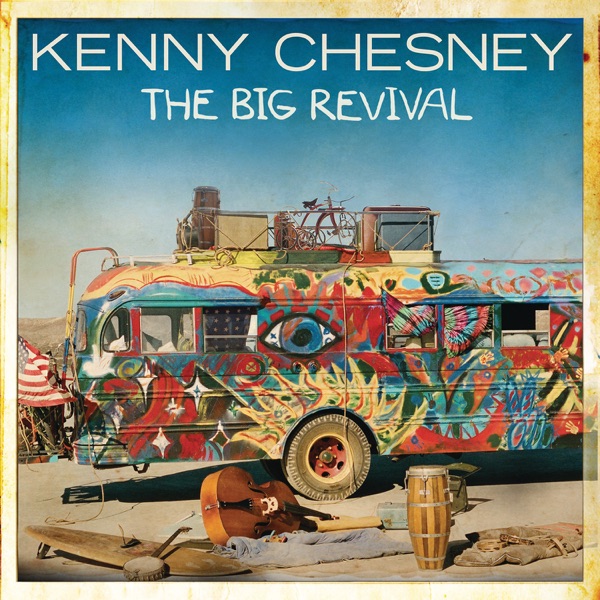
From 2015 onward, Kenny Chesney entered what music analysts might reasonably call his legacy phase, a period defined less by the hunger of commercial conquest and more by the quiet confidence of an artist who has already proven himself. The Big Revival (2014) and Cosmic Hallelujah (2016) anchored this transition, generating radio-ready singles including 'American Kids' and 'Save It for a Rainy Day' while deepening Chesney's reputation as one of country music's most perceptive chroniclers of American working-class life. Twelve consecutive number-one country albums between 2004 and 2020 confirm that this phase carried no commercial concessions; Chesney simply expanded his thematic vocabulary without abandoning the audience he had spent two decades building.
Thematic Depth Over Chart Strategy
The analytical case for Chesney's late-career evolution rests on a traceable thematic arc. Early Chesney centered romance and summer escapism, the uncomplicated pleasures of sun, water, and freedom. Mid-career Chesney, as heard in 'Don't Blink' and 'Young,' introduced mortality, nostalgia, and the bittersweet weight of time moving faster than expected. Late-career Chesney, particularly across the 2016 to 2024 window, integrates all three registers with a self-aware, almost elegiac quality. Songs like 'Noise' and 'Get Along' reflect a songwriter responding to cultural exhaustion with something approaching earned wisdom. This evolution resonates with particular force because Chesney's core audience has aged alongside him; listeners who first encountered him as young adults in the late 1990s now hear those same emotional frequencies through the lens of middle age.
Coastal Production as Thematic Architecture
Chesney's coastal and reggae-influenced production style deserves more than a genre footnote. It functions as a deliberate thematic mechanism, associating his entire catalog with freedom, escape, and the suspension of ordinary time. These are emotional states that country radio's more traditionally structured productions struggle to replicate. Collaborations like 'You and Tequila' (featuring Grace Potter) and 'Setting the World on Fire' (with P!nk) demonstrate how this sonic identity holds even when paired with artists from outside country's center, as the coastal palette provides a consistent emotional container regardless of co-vocalist or production variation.
The Pandemic Era and Creative Continuity
Here and Now (2020) extended Chesney's consecutive number-one country album streak through the COVID-19 period. When his stadium touring, a commercial engine he had run continuously since 2002, was paused by the pandemic, Chesney stepped back from the live circuit that had defined much of his public identity. He returned to touring in April 2022. That pause, regardless of any specific creative outputs during the hiatus, marked a rare moment of stillness for one of country's most relentlessly active touring acts, and the material that followed reflects a songwriter more willing to sit with complexity than resolve it quickly. For listeners wanting to trace this thematic evolution through close reading, 'Noise,' 'Get Along,' 'You and Tequila,' and 'Setting the World on Fire' are all available for lyric-level analysis on MyBesh. Kenny Chesney's full concert and tour history and career popularity data provide additional context for understanding how his commercial and artistic trajectories have remained unusually aligned across this period.
Hall of Fame, Sphere Las Vegas, and Hey Now Records (2025-2026)
On October 19, 2025, Kenny Chesney was officially inducted into the Country Music Hall of Fame, the genre's highest institutional honor. The induction was not a surprise; it was a confirmation. Chesney's 36 Country Airplay No. 1 singles, 99 charting singles, and 30 million albums sold had built the argument across three decades. What the Hall of Fame ceremony formalized was something the numbers already implied: that his coastal and island-inflected approach to country songwriting was not a commercial detour but a genuine subgenre contribution, one that expanded the sonic vocabulary of mainstream Nashville and demonstrated that themes of sun, salt water, and small freedoms could carry the same emotional weight as the genre's traditional rural and heartland narratives. Billboard had previously named Chesney the Top Country Star of the 21st Century, and the Hall of Fame induction placed that commercial legacy inside a permanent critical frame.
Sphere Las Vegas: Immersive Technology Meets Catalog Identity
That same year, Chesney made history as the first solo artist and the first country artist to headline a residency at Sphere Las Vegas, the wraparound LED and spatial audio venue whose architecture is unusually well-matched to his catalog's visual personality. Where a conventional arena stage flattens a song about the ocean into a metaphor, Sphere's 360-degree environment literalizes it; the 2025 production featured sequences including "One Lonely Island," which surrounded audiences with sweeping night skies and tropical coastlines, and "Welcome To The Fishbowl," a social media-themed immersive segment that demonstrated the venue's capacity for concept-driven storytelling. USA Today called the shows "a vibrant, visually arresting feast" and described the experience as "a sonic and visual rollercoaster." Chesney himself noted that Sphere's spatial design creates an intimacy that stadium shows cannot replicate: "Even though it's a pretty big room and there are a lot of people in there, with the way it's constructed, everyone is so close, you can do things that are a lot slower, that really want to be listened to." The 2025 residency received a Pollstar Awards nomination for Residency of the Year.
An expanded 2026 edition, officially titled Kenny Chesney Live at Sphere Las Vegas, has 11 confirmed shows scheduled across June 19, 20, 24, and 26-27, and July 1, 3, 4, 8, 10, and 11 (as of early 2026). Chesney has indicated the 2026 production will feature 30 to 40 percent or more new or rarely performed material. Full details on the residency are available via his official news coverage of Sphere 2026.
Hey Now Records, Silver Sands Marina, and the Independent Turn
In March 2026, Chesney signed as the flagship artist of Hey Now Records, a newly launched independent label co-founded by Clint Higham, John Esposito, and Kris Lamb. Esposito, a 15-year veteran as Chairman and CEO of Warner Music Nashville, framed the label's founding rationale directly: "HEY NOW Records was born out of conversations Clint, Kenny and I had about the increasing lack of focus that artists are getting as rosters increase while staffs shrink." Lamb, who contributed to more than 80 No. 1 hits during his time at Disney's Lyric Street Records and Big Machine Label Group, described the label as "a place where whatever we can conceive, we can realize." The lead single "Carry On" was released in connection with the signing.
Chesney also headlined the 2026 Tortuga Music Festival in Fort Lauderdale, Florida, a coastal, beach-themed event whose brand identity mirrors his own catalog's geography so precisely that the booking reads less like a festival appearance and more like a thesis statement. After more than three decades, the artist and the environment remain unmistakably aligned.
Key Singles
Chesney has accumulated 33 number-one hits on the Billboard Country Airplay chart, making him one of the most successful singles artists in country music history. The highlighted singles below represent career-defining moments across each phase of his recording career.
Frequently Asked Questions About Kenny Chesney
What is Kenny Chesney's real name?
Kenny Chesney's real name is Kenneth Arnold Chesney. He was born on March 26, 1968, in Knoxville, Tennessee, and raised in the small East Tennessee community of Luttrell. He has recorded and toured exclusively under the stage name Kenny Chesney throughout his entire professional career, and no legal or professional variation of his name appears on any of his studio releases.
What was Kenny Chesney's first number-one hit?
Kenny Chesney's first number-one hit on the Billboard Hot Country Songs chart was "Me and You," a track from his 1996 BNA Records album of the same name. The song demonstrated the romantic, conversational directness that became his defining artistic signature across more than three decades of recording. Its success marked the moment Chesney shifted from a promising Nashville newcomer into a genuine commercial force in mainstream country music.
Was Kenny Chesney married to Renée Zellweger?
Yes. Kenny Chesney married actress Renée Zellweger on May 9, 2005, in a private ceremony on the island of St. John in the U.S. Virgin Islands. The two had met just months earlier at a January 2005 benefit event for victims of the 2004 Indian Ocean tsunami. The marriage ended approximately four months later, with Zellweger filing for an annulment rather than a divorce. Chesney has remained unmarried since and has kept his personal life notably private in the years following.
Is Kenny Chesney in the Country Music Hall of Fame?
Yes. Kenny Chesney was officially inducted into the Country Music Hall of Fame on October 19, 2025, receiving the genre's highest institutional honor. The induction recognized his more than three decades of sustained commercial success, his transformative impact on large-format country touring, and his influence on the coastal and island-inflected crossover sound now embedded in mainstream country. The Country Music Hall of Fame and Museum currently houses an active exhibition titled "Kenny Chesney: Living in Fast Forward" (as of July 2026), further cementing his place in the genre's documented history.
What is Kenny Chesney working on in 2026?
In 2026, Kenny Chesney is among the most active legacy artists in country music. In March 2026, he signed as the flagship artist of the newly launched independent label Hey Now Records and released the lead single "Carry On" ahead of his forthcoming 21st studio album, Silver Sands Marina. He expanded his groundbreaking Sphere Las Vegas residency to 11 confirmed shows across June and July 2026, using the venue's immersive spatial audio and LED technology to bring his coastal imagery catalog to life. He also appeared at the 2026 Tortuga Music Festival in Fort Lauderdale, Florida, an event whose beach-and-ocean identity aligns precisely with his "No Shoes Nation" brand.
A Verified Surprising Fact and What Comes Next
Perhaps the most counterintuitive fact in Kenny Chesney's entire biography is this: he did not pick up a guitar until he was a college sophomore at East Tennessee State University, receiving one as a Christmas gift. That means the complete instrumental foundation underneath a 30-million-album career was assembled through roughly four years of undergraduate self-teaching before he ever set foot in Nashville. Most country stars are mythologized as childhood prodigies who played before they could read. Chesney was not one of them. His musical identity was formed first by absorption, watching bluegrass on The Cas Walker Show with his grandparents, attending concerts by Conway Twitty, George Jones, and Merle Haggard, and internalizing the emotional architecture of storytelling songs long before his hands learned to produce them. Critics and analysts who note that Chesney's vocal phrasing and lyric instincts consistently read as more sophisticated than his guitar work are, without knowing it, describing this exact biographical sequence. The ear and the voice came first. The instrument followed.
A Career Now at Its Most Technologically Ambitious Point
As of mid-2026, Chesney is operating on two parallel tracks that together represent the most creatively autonomous and technically advanced phase of his career. The 11-show Sphere Las Vegas residency running across June and July 2026 is the first venue technology in his lifetime capable of fully reproducing the sensory world his songs have always described. Sphere surrounds audiences with 16K immersive visuals of beaches and open water, deploys spatial audio that places the sound environment around rather than in front of listeners, and uses in-seat haptics so attendees physically feel the rhythm. For an artist whose entire catalog is built around transporting listeners to a place they can almost feel, this is not a novelty booking. It is the logical endpoint of an artistic identity three decades in development. Chesney's touring numbers have long rivaled rock acts; Pollstar placed him on its Top Touring Artists of the Millennium list between Bruce Springsteen and Metallica, the only country act in that grouping.
Simultaneously, Chesney's March 2026 signing as flagship artist of Hey Now Records marks the beginning of a fully independent creative chapter after roughly three decades inside major-label infrastructure. Silver Sands Marina, his 21st studio album and the label's inaugural full-length release, is scheduled for September 25, 2026 (verify against official channels before publishing). The lead single "Carry On" became only the third single in country radio history to lock out the full reporting panel in its debut week, doing so as an independent release, a commercial signal that is genuinely rare in the format.
Explore the Songs at the Lyric Level
Readers who want to move beyond biography and into the craft of Chesney's most enduring material can find editorial song interpretation pages on MyBesh for "The Good Stuff," "Don't Blink," "Summertime," "You and Tequila," and "American Kids." Each page provides analysis of theme, structural mechanics, and the specific emotional mechanisms that have made these tracks resonate across decades and demographics.
Kenny Chesney's Enduring Legacy in Country Music
Kenny Chesney's legacy in country music operates on three distinct but interlocking levels. Commercially, the numbers are unambiguous: more than 30 million albums sold globally, 31 No. 1 singles, 12 CMA Awards including four consecutive Entertainer of the Year honors, and a Country Music Hall of Fame induction on October 19, 2025. As a live act, Chesney sustained stadium-level touring for nearly three decades, commanding audiences that rivaled rock headliners, and has now pushed that live experience into genuinely new territory as the first solo and first country artist to headline a Sphere Las Vegas residency. Thematically, he took the coastal and island sensibility that existed at the margins of country music and moved it to the center, building a sonic and emotional vocabulary around summer freedom, escape, and the passage of time that permanently expanded what mainstream country could sound like and feel like.
For readers exploring his work, the discography table earlier in this article is the practical starting point. Identify the era that connects, then follow those tracks to individual song interpretation pages on MyBesh, where lyric-level analysis reveals layers that surface listening consistently misses.
The current moment deserves particular attention. The Hey Now Records signing and the forthcoming Silver Sands Marina album make 2026 the most consequential creative chapter Chesney has opened since the early-2000s breakthrough. Tracking that rollout through MyBesh's news and chart sections will provide real-time context as the project lands.
Most significantly, the Hall of Fame induction did not arrive at the end of his story. It arrived while he was simultaneously launching an independent label and headlining the most technologically advanced concert venue ever constructed. That specific combination has no precedent in country music history.
Conclusion
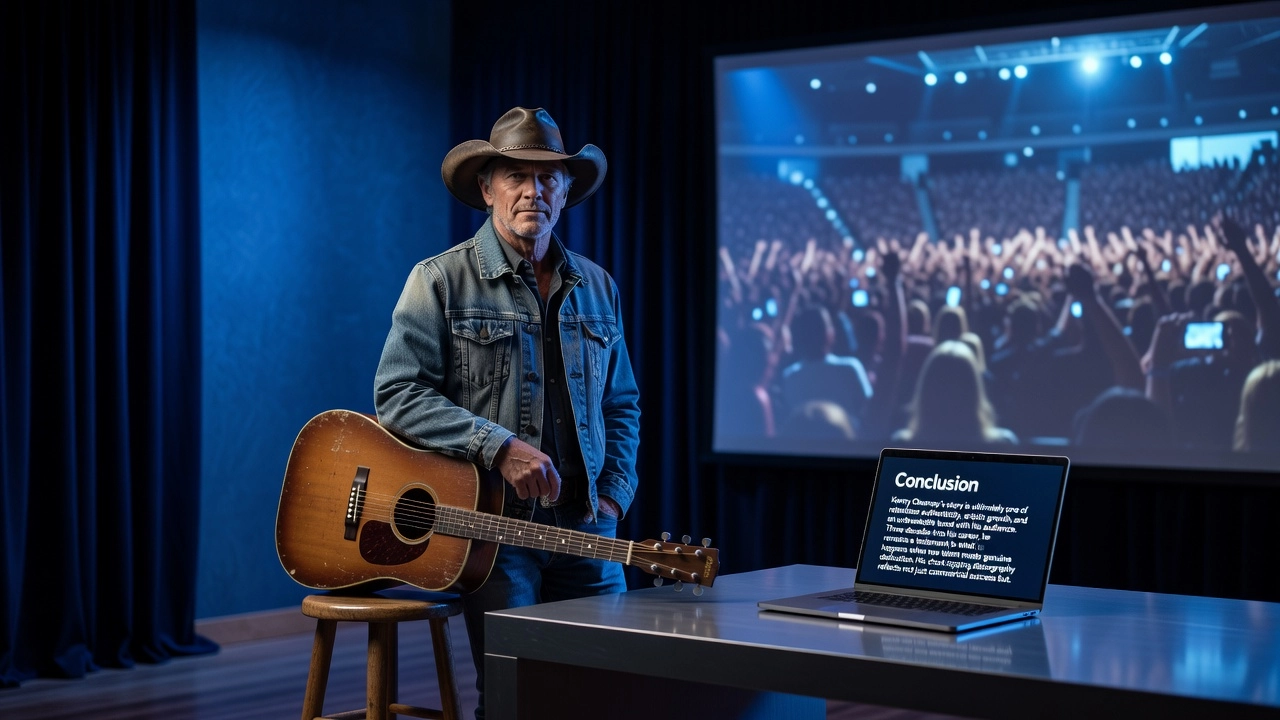
Kenny Chesney's story is ultimately one of relentless authenticity, artistic growth, and an unbreakable bond with his audience. Three decades into his career, he remains a testament to what happens when raw talent meets genuine dedication. His chart-topping discography reflects not just commercial success, but a rare ability to capture universal human experiences in three-minute songs. His stadium-filling legacy proves that country music, at its best, transcends genre entirely.
Whether you are a lifelong fan or just discovering his catalog, now is the perfect time to dive deeper. Start with his landmark albums, explore the stories behind his biggest hits, and pay attention to the craftsmanship that has kept him relevant across generations. Kenny Chesney's music does not just entertain. It reminds us who we are, where we come from, and what truly matters.

 via depositphotos ↗