Picture a teenager sitting in his bedroom, filming himself singing covers on a now-defunct social media app called Vine. Fast forward a decade, and that same kid is selling out arenas and releasing deeply personal music that sounds nothing like those early clips. That teenager is Mendes, Shawn Mendes, and his journey is one of the most fascinating transformations in modern pop music.
If you're new to his story, you're in for a treat. Shawn started as a fresh-faced cover artist who won fans over with his charming smile and undeniable vocal talent. But over the years, he quietly evolved into something much more interesting, a thoughtful songwriter who leans into folk influences, raw emotion, and confessional lyrics that feel almost like reading someone's private journal.
In this post, we're going to break down exactly how that transformation happened. We'll look at his early beginnings, trace the musical shifts across his albums, and figure out what makes his recent work stand out from his pop radio days. No music theory degree required, just curiosity and maybe a playlist ready to go.
If you've only heard the name Shawn Mendes in passing, the numbers alone tell a remarkable story. As of mid-2026, Mendes commands 56,239,829 monthly Spotify listeners and holds the #45 global ranking on the platform. To put that in perspective, he sits in the same tier as artists who have been releasing music for two or three decades. For someone who started by posting cover songs on Vine in 2013, that kind of sustained streaming presence is genuinely hard to earn, and even harder to maintain.
On the awards front, Mendes is a three-time GRAMMY nominee. His self-titled 2018 album earned two nominations at the 61st Annual GRAMMY Awards, a milestone that confirmed his transition from social media phenomenon to credible recording artist.
These numbers matter because they provide the context for everything that comes next. When an artist operating at this scale decides to abandon arena pop for intimate folk songwriting, that choice carries cultural weight. Understanding how big Shawn Mendes actually is makes his reinvention far more interesting to unpack.
Before Shawn Mendes had a record deal, a debut album, or a single radio play, he had a phone and a six-second window. Starting in 2013, a 14-year-old Mendes began posting short guitar cover clips on Vine, the now-defunct looping video platform that briefly dominated social media. He wasn't pitching to labels or following a career plan. He was just a Canadian teenager playing songs he loved, including covers of tracks like "Counting Stars" and "Lego House," in front of a phone camera. But within months, those clips were racking up millions of views, and by August 2014, Mendes had become the third most-followed musician on the entire platform. That kind of organic momentum was almost unheard of at the time, and it directly caught the attention of artist manager Andrew Gertler, who discovered Mendes online in January 2014 and brought him to Island Records shortly after.
The speed of what happened next is genuinely striking. Mendes signed to Island Records and released his debut single "Life of the Party" in June 2014, debuting at number 24 on the US Billboard Hot 100. That made him the youngest artist ever to debut in the top 25 on that chart with a debut single. He was 15 years old. A self-titled EP followed in July 2014, debuting at number five on the Billboard 200 with 48,000 first-week copies sold. The Vine-to-mainstream pipeline Mendes helped pioneer is now studied as one of the earliest examples of social media virality translating directly into a sustained recording career, not a one-hit novelty.
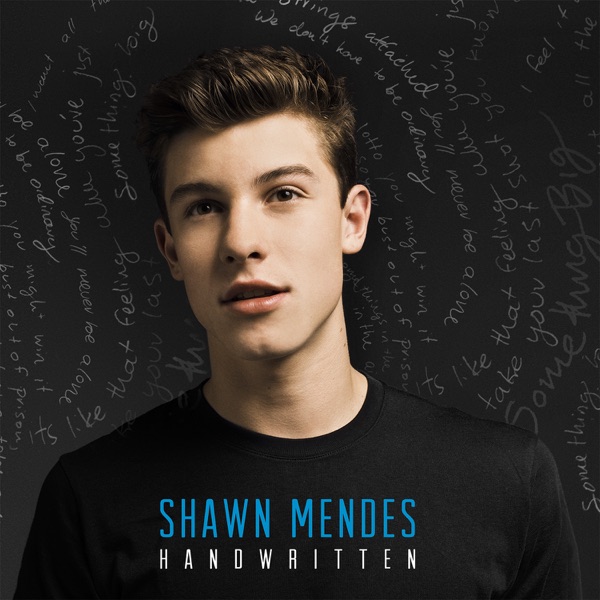
If you want to explore the thematic layers of "Stitches" and other Handwritten-era songs in more detail, MyBesh offers full lyric analysis and interpretation for the album's key tracks, giving listeners revisiting the era in 2026 a richer understanding of what Mendes was actually saying beneath the pop melodies.
Arena Pop and Billion-Stream Anthems: The Illuminate and Self-Titled Era (2016 to 2020)
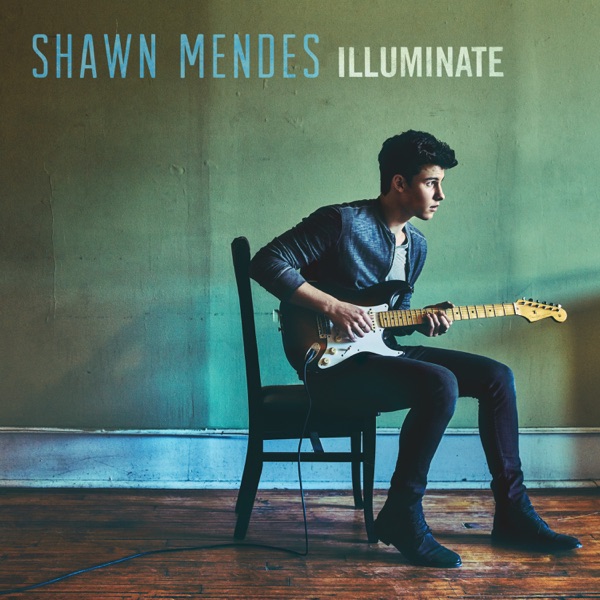
If the first era was about proving Shawn Mendes could make a real album, the second era was about proving he could make ones that millions of people couldn't stop playing. Between Illuminate in 2016 and the self-titled Shawn Mendes in 2018, he built one of the most statistically impressive catalogs in modern pop, generating three tracks that have each crossed two billion Spotify streams: Treat You Better (3.03 billion), There's Nothing Holdin' Me Back (2.93 billion), and Mercy (1.73 billion). For context, reaching a single billion streams places a song in rare territory. Mendes did it three times with songs from back-to-back albums, and Illuminate alone debuted at number one in ten countries, including the US and Canada.
Treat You Better and the Power of Saying the Quiet Part Out Loud
"Treat You Better" is not a complicated song, and that's precisely why it works. The production is clean and guitar-forward, the melody is immediate, and the lyric gets straight to the point: I can do better for you than the person you're with right now. There's no elaborate metaphor here, just the specific tension of watching someone you care about stay in the wrong relationship while you say nothing. That emotional honesty connected with a massive audience, and it continues to connect. In 2026, the song is celebrating its 10th anniversary, and Mendes has been marking it actively with live releases including Treat You Better (Live From New York), which pulled 4.3 million TikTok views. The World Music Awards noted that the music video ranks as the 36th most-viewed on YouTube, placing Mendes in the billion-view club among a very short list of Canadian artists.
Señorita: More Than a Song, a Cultural Moment
Then there's "Señorita," and it deserves a closer look than a simple streaming number. At 3.38 billion Spotify streams, it is Mendes's single most-listened-to recording, edging out even his biggest solo hits. The 2019 collaboration with Camila Cabello was built around Latin-influenced production, a warm breezy groove, and lyrics structured as a playful back-and-forth between two people circling the same moment without quite admitting it. But what pushed "Señorita" from big pop single to genuine cultural event was the timing. Mendes and Cabello's real-life relationship became public around the same period the song dropped, and that context made the call-and-response format feel less like a songwriting device and more like a window. According to Global Music Rights, it broke Spotify's record for the biggest debut ever from a male and female duet, topped the United World Chart for 13 consecutive weeks, and reached number one in a record 40 countries. It also earned a Grammy nomination for Best Pop Duo/Group Performance at the 62nd Annual Grammy Awards, adding critical recognition to its commercial dominance.
In My Blood: The Song That Changed the Stakes
While "Señorita" was Mendes at his most commercially polished, "In My Blood" was something quieter and more significant. Released in 2018, the song opens with the line "I feel like I can't breathe" and builds into an exploration of anxiety, the pull toward giving up, and the effort it takes to keep going. What made it stand out was its directness. There was no romantic framing or abstract imagery shielding the subject matter, just an honest account of what it feels like when the weight gets heavy. That lyrical transparency would become a defining thread in everything Mendes made afterward, including his 2024 album Shawn, which leaned even further into personal vulnerability.
GRAMMY Recognition and Songwriter Credibility
The industry took notice. The self-titled Shawn Mendes album received two nominations at the 61st Annual Grammy Awards: Song of the Year for "In My Blood" and Best Pop Vocal Album for the record itself. Those nominations carried real weight because they signaled something beyond streaming volume. They said the Grammy Recording Academy considered Mendes a legitimate songwriter, not just a pop phenomenon riding algorithmic momentum. The album had already debuted at number one on the Billboard 200 and shot to the top of iTunes in more than 80 countries. The Grammy recognition confirmed that the numbers reflected genuine craft, and that framing would shape how his later, more introspective work was received.
The Wonder Era and the Breaking Point: Mental Health, a Cancelled Tour, and What Came Next (2020 to 2022)
When Wonder arrived in December 2020, the world was in the middle of a pandemic and Shawn Mendes was doing something he had never quite done before: putting emotional fragility front and center, not as a subplot but as the whole point. Where earlier albums had flashes of vulnerability woven between radio-ready anthems, Wonder leaned into introspection as a deliberate aesthetic choice. Tracks like "Call My Friends" explored loneliness on the road, while "Monster" (featuring Justin Bieber) confronted the isolating cost of celebrity. The title track itself sat with uncertainty and self-doubt rather than resolving into triumph. The album debuted at No. 1 on the Billboard 200 with 89,000 album-equivalent units in its first week, proving the audience was there. But this era was less about chart performance and more about a genuine shift in how Mendes presented himself as an artist.
A Breaking Point Made Public
Then came July 27, 2022, and one of the most candid announcements in recent pop history. The Wonder World Tour had just launched in June, but after roughly seven shows, Mendes cancelled the remaining dates, covering over 70 planned performances stretching into 2023. In his statement, he wrote that he needed to "take the time I've never taken personally to ground myself and come back stronger." He later described cancelling the tour as "by far the hardest decision of my life and by far the greatest decision of my life." This was not a vague reference to exhaustion or scheduling conflicts. It was a direct, public acknowledgment that mental health was the reason he was stepping away from one of the most visible platforms in pop music. You can read more about the full context of that announcement through CBC's original reporting on the cancellation.
Two Ways of Seeing the Same Moment
The reaction was split. For many fans and mental health advocates, the decision felt courageous, a rare example of someone choosing well-being over momentum in an industry that almost never rewards slowing down. For others, it read as a sign of an artist in genuine crisis. Both readings were understandable given what was at stake commercially and professionally. What became clearer in retrospect, looking back from 2024 and 2025, is that the hiatus was not the end of something but the beginning. The time away included therapy, reconnection with family and friends, and a slower creative process that eventually produced Shawn (2024), his most critically and personally ambitious record to date. The full album documentation for Wonder) captures how even the album's mixed critical reception, which earned a Metacritic score of 65 out of 100, was part of an honest experiment in emotional openness that the industry wasn't fully ready to reward.
A Six-Year Arc That Nobody Has Fully Connected
Here is what makes this era genuinely interesting when you zoom out. "In My Blood" from 2018 was the first time Mendes wrote explicitly about anxiety, describing walls caving in and the feeling of being overwhelmed while refusing to quit. That song connected with millions of people precisely because it said something real. The Wonder album (2020) expanded those themes into loneliness, fame, and self-doubt across a full project. The 2022 tour cancellation was the moment those themes stopped being lyrical and became lived reality in public. And Shawn (2024) was where everything processed during the hiatus came out as fully formed folk-influenced songwriting about identity, mental health, and growth. This is a coherent narrative arc across nearly six years, and it is still unfolding.
If you want to follow this thread song by song, MyBesh has full lyric breakdowns for "In My Blood" and key Wonder-era tracks that show exactly how the themes developed album by album. It is one of the clearest ways to see how an artist's inner life and public story can move together across time.
Shawn (2024): What the Folk Pivot Actually Means
Released on October 18, 2024, Shawn is his fifth studio album and arguably the most deliberate artistic statement of his career. Grammy.com described it as "his most musically intimate and lyrically honest work to date," and that framing is accurate in a very specific way. This is not an album trying to recreate the scale of "Treat You Better" or "Señorita." It trades arena production for acoustic intimacy, replacing the pop gloss that built his streaming numbers with something that feels closer to a confessional journal. Every original track runs under three minutes. The arrangements are withdrawn, sparse, and intentionally minimal. That is not an accident; it is a structural choice.
Why Folk Actually Changes the Rules
The genre shift here matters beyond just the sound. Folk as a form has a built-in demand that pop does not: it requires lyrical specificity. When you strip away the production layer, the big chorus, and the studio sheen, the words have nowhere to hide. A pop hook can carry a vague emotional idea and still hit hard. A bare acoustic track without that production cushion lives or dies on whether the lyrics say something real. Shawn the album appears to understand this pressure. The Hebron Hawk Eye's review called it his most intimate album, and that intimacy is partly a product of the form itself forcing his hand.
The track listing reflects that approach. Songs like "Heavy," "Nobody Knows," and "In Between" draw directly from the personal experiences that shaped his multi-year hiatus, covering heartbreak, mental health struggles, and what Grammy.com described as "self-exploration." These are not abstract themes borrowed for artistic effect. The Wonder Tour cancellation after just seven shows, the public acknowledgment that he needed to step away to protect his mental health, the return to smaller venues playing for around 500 people during the hiatus period; all of that biographical material is audible in the album's emotional texture. The Medium review of the album frames the record as an exploration of "his journey away from the spotlight," which aligns with how Mendes has spoken about the period himself.
Is This a Genuine Pivot or a Calculated Move?
This is actually the most interesting question the album raises, and it is worth sitting with rather than dismissing. Critics and listeners have noted that Shawn arrived during a wider 2023 to 2024 industry moment where pop artists were pivoting toward folk and Americana aesthetics. Music critic Alex Mars raised the question directly, asking whether the shift represents genuine artistic evolution, a response to broader folk-pop trends, or a bid for critical credibility. One commenter pushed back, pointing out that Mendes has publicly stated he is "no longer people-pleasing" and has "nothing to prove to anyone," suggesting the record is self-directed rather than market-responsive. Longstanding collaborators Scott Harris, Mike Sabbath, and Eddie Benjamin, friends and co-writers present since 2015, worked on the album, which points toward production continuity beneath the sonic change rather than a sudden reinvention.
The album closes with a cover of "Hallelujah," a choice that has divided listeners. Some see it as a fitting emotional bookend to a confessional record. Others feel it undercuts the album's thesis by ending on borrowed material rather than his own voice. The debate itself is revealing: an artist whose audience previously accepted glossy pop anthems without much critical scrutiny is now generating genuine conversation about artistic intent. That is a meaningful shift regardless of where you land on the album's quality.
For listeners who want to move past the surface level and actually understand what Mendes is saying on specific tracks, MyBesh offers song-by-song interpretation across the full Shawn (2024) album. The stripped arrangements can make the lyrics feel dense and personal in ways that reward closer reading, and having that layer of analysis available makes the album considerably more accessible for anyone coming to it fresh.
The Comeback Tour, the Anniversary Cycle, and Where Things Stand in 2026
The return to the stage in 2025 was not a quiet one. Under the On The Road Again Tour branding, Mendes completed a genuinely global run that spanned South America, Europe, and North America. What made it more than just a standard comeback announcement was a TikTok he posted ahead of the South American dates, where he openly admitted he was "scared." That kind of honesty is not something most artists put into a promotional post. After completing those shows, he described them as "some of the best shows of my life," adding that time away had helped him remember "how unbelievably special it is to get to play live shows." For anyone who followed the 2022 Wonder Tour cancellation closely, that arc from fear to gratitude felt genuinely earned rather than scripted.
The scale of the tour made it clear this was not a tentative dip back into live performance. Mendes headlined Sziget Festival on August 7, 2025, one of Europe's largest multi-day music festivals, which promoted his appearance with the caption "What a comeback!" The European leg also included a date at London's O2 Arena, a 20,000-capacity venue where simply getting booked as a headliner, rather than a support act, carries real industry weight. North American dates followed in the fall, opening September 25 in Boston and wrapping at the Hollywood Bowl in Los Angeles. The routing confirmed what the album cycle alone could not: Mendes had re-established himself as a credible live headliner at significant scale.
By 2026, the focus shifted toward a smart anniversary content strategy tied to the Illuminate era. "Treat You Better (Live From New York)" racked up 4.3 million TikTok views as part of a ten-year celebration of the track, and "Ruin (Live From Boston)" followed on July 8, 2026 with the same framing. The approach is worth paying attention to because it does two things at once. For longtime fans, these live versions offer a fresh way to experience songs they already love, with the added texture of a real room and a real crowd. For new listeners who might be just discovering Mendes through his 2024 folk pivot, the live recordings are an accessible entry point into the back catalog. It is a low-pressure way to say: here is where this music came from, and here is what it sounds like now.
Outside of music, a Gucci collaboration event appearance in May 2026 rounded out a picture of an artist operating across multiple cultural spaces simultaneously. Fashion and music have long overlapped for artists at his level, and his attendance at a Gucci event tied to designer Demna's new creative direction signals genuine proximity to the luxury world, not just a one-off photo opportunity. This kind of brand presence runs parallel to the music reinvention rather than distracting from it.
Taken together, the On The Road Again Tour, the anniversary releases, and the fashion crossover paint a consistent picture heading into 2026. Mendes is not trying to recapture the arena-pop version of himself from 2018. He is building something that looks more durable: an artist with a decade of proven catalog, a renewed relationship with live performance, and a content strategy that keeps legacy tracks relevant without pretending the last few years did not happen.
Why Shawn Mendes Still Matters: A Legacy in Progress
The arc from teenage Vine cover artist to folk songwriter openly addressing mental health is not a straight line, but looking back across the full decade, it is a remarkably coherent one. Very few artists who broke through social media in the early 2010s have held onto both mainstream commercial relevance and genuine artistic credibility simultaneously. The numbers back this up: 56 million monthly Spotify listeners and a #45 global ranking in mid-2026 are not the metrics of someone coasting on nostalgia. They reflect an audience that has grown alongside him, plus new listeners discovering the catalog for the first time.
What has kept that audience engaged is something harder to manufacture than a catchy hook. His willingness to treat personal difficulty as creative material, rather than something to quietly manage offstage, has produced the most emotionally honest work of his career. That approach is becoming more central to his identity as an artist, not less. The Shawn (2024) album made that shift undeniable, and the live recordings released in 2026 are continuing to reframe older songs through that same lens of earned vulnerability.
Right now is actually a genuinely exciting moment to be a Mendes listener. The anniversary cycle, the live-recording releases like Ruin (Live From Boston), and a full decade of studio albums give new fans a rich, complete catalog to explore, while longtime listeners are getting recontextualized versions of songs they already know by heart.
For anyone who wants to go deeper on what his lyrics are actually saying, across any era, MyBesh provides lyric analysis and interpretation across his full discography, from Stitches all the way through Ruin (Live From Boston), all in one place. And for a broader look at just how far he has come commercially, this career overview from InMusic covers the full chart and sales picture in one place.
Takeaways: Understanding Shawn Mendes as an Artist
If you want a practical entry point into his catalog, start with "In My Blood" from the 2018 self-titled album. That song is the clearest early signal of where his mental health storytelling would eventually go, and hearing it alongside anything from Shawn (2024) shows you exactly how far the writing has matured over six years.
From there, revisit "Señorita," "Treat You Better," and "There's Nothing Holdin' Me Back" as more than radio staples. Each one is a lyrical snapshot of a different emotional moment in his life, and together they map a career built on feelings rather than formulas.
To really hear the folk pivot, put any track from Shawn (2024) directly next to something from Handwritten. The distance is immediately obvious, and it tells a story no biography could.
Check MyBesh for full song interpretations across his entire discography, including the 2026 anniversary live releases, to go deeper than the surface level. And keep watching through the rest of 2026; more Illuminate-era live recordings are likely on the way, and each one is a fresh entry point into a catalog that genuinely rewards closer listening.
Conclusion
Shawn Mendes' journey is proof that true artistry is never static. From filming bedroom covers on Vine to crafting deeply personal folk-influenced albums, he has consistently chosen growth over comfort. His willingness to strip away the polished pop exterior and embrace vulnerability is what separates him from his peers. Most importantly, his evolution reminds us that the most compelling artists are the ones brave enough to keep reinventing themselves.
Now it's your turn to dig deeper. Go back and listen to his discography from the beginning, and pay attention to how his voice, lyrics, and production choices shift with each album. You'll hear a young man slowly finding himself through music. If his story resonates with you, share this post with a fellow fan and let the conversation continue. The best music always deserves more ears.

 via depositphotos ↗