30-sec preview
1976 · From the album Hotel California
Hotel California
by Eagles
02 · Interpretation
Hotel California: Full Lyrics, Meaning and Song Analysis
Few songs in rock history have captivated listeners quite like "Hotel California" by the Eagles. Since its release in 1977, this iconic track has sparked endless debate, inspired countless theories, and remained one of the most analyzed pieces of music ever recorded. Yet despite its massive popularity, many listeners find themselves wondering what the Hotel California lyrics actually mean and what story they are truly telling.
If you have ever found yourself lost in the haunting melody and mysterious words of this song, you are in the right place. In this post, we will break down the complete lyrics line by line, explore the deeper meaning behind the imagery, and uncover what Don Henley and the Eagles were really trying to say. Whether you are hearing this song for the first time or have listened to it hundreds of times, this analysis will give you a fresh perspective and a much deeper appreciation for one of rock music's greatest masterpieces. By the end, the song's cryptic story will finally make sense in a clear and satisfying way.
Hotel California: Full Lyrics
Before diving into the meaning and symbolism, here are the complete lyrics to "Hotel California" on MyBesh exactly as written by Glenn Frey, Don Felder, and Don Henley for the 1976 album of the same name. The Eagles never released an official line-by-line annotated lyric sheet, and Don Henley has consistently left interpretation open to listeners, famously explaining in a 2007 interview that the song "can have a million interpretations." That openness is part of why the Genius lyrics page has attracted over 306 contributors and 5 million views from fans working to decode every line.
Instrumental Intro
(Guitar-driven opening, no sung lyrics)
Verse 1
On a dark desert highway, cool wind in my hair Warm smell of colitas rising up through the air Up ahead in the distance, I saw a shimmering light My head grew heavy and my sight grew dim I had to stop for the night
Verse 2
There she stood in the doorway, I heard the mission bell And I was thinkin' to myself, "This could be heaven or this could be hell" Then she lit up a candle and she showed me the way There were voices down the corridor I thought I heard them say
Chorus
"Welcome to the Hotel California Such a lovely place (such a lovely place) Such a lovely face Plenty of room at the Hotel California Any time of year (any time of year) You can find it here"
Verse 3
Her mind is Tiffany-twisted, she got the Mercedes-Benz She got a lot of pretty, pretty boys that she calls friends How they dance in the courtyard, sweet summer sweat Some dance to remember, some dance to forget
So I called up the Captain, "Please bring me my wine" He said, "We haven't had that spirit here since 1969" And still those voices are calling from far away Wake you up in the middle of the night just to hear them say
Chorus (Second Occurrence)
Note: The second chorus changes its closing lines, a detail many listeners miss.
"Welcome to the Hotel California Such a lovely place (such a lovely place) Such a lovely face They're livin' it up at the Hotel California What a nice surprise (what a nice surprise) Bring your alibis"
Verse 4
Mirrors on the ceiling, the pink champagne on ice And she said, "We are all just prisoners here of our own device" And in the master's chambers, they gathered for the feast They stab it with their steely knives, but they just can't kill the beast
Outro
Last thing I remember, I was running for the door I had to find the passage back to the place I was before "Relax," said the night man, "We are programmed to receive You can check out any time you like, but you can never leave"
(Extended dual-guitar outro performed by Don Felder and Joe Walsh, approximately 1 to 2 minutes, no further sung lyrics)
Key Lyrical Motifs to Notice
Even a first read reveals several images that reappear and echo across the song. Mirrors ("mirrors on the ceiling") suggest vanity and distorted self-perception. Wine and spirit carry deliberate double meaning; when the Captain says "we haven't had that spirit here since 1969," the word spirit refers simultaneously to alcohol and to something deeper, perhaps the soul itself. Steely knives point toward an inescapable force, whether addiction, ambition, or excess, that cannot be destroyed no matter how hard one tries. The corridor first appears in Verse 2 and functions as a psychological threshold, the point where the narrator crosses from the outside world into something he cannot escape. Finally, the closing couplet lands with no resolution. The song ends on the line "you can never leave," followed only by guitars, leaving the narrator permanently suspended. That unresolved quality, deliberate and precise, is exactly why this Eagles - Hotel California lyrics video continues drawing millions of new listeners who sense something unfinished and keep returning to find it.
What Is Hotel California About? The Meaning Explained
Don Henley offered the clearest window into the song's purpose in a 2016 interview, stating: "It's not really about California. It's about America. It's about the dark underbelly of the American dream. It's about excess, it's about narcissism. It's about the music business. It can have a million interpretations." That single statement tells you something important before you analyze a single lyric. The song was never meant to be a postcard or a travelogue. It was always meant to be a diagnosis.
A Deliberate Artistic Shift
By 1976, the Eagles were consciously moving away from the cleaner, sunlit country-rock sound that had defined their early career. The Hotel California album, released on February 22, 1977, marked a decisive turn toward something darker, stranger, and more ambitious. This was not a band coasting on commercial success. It was a band making a deliberate choice to write with more weight, more tension, and more thematic complexity. The song sits at the center of that shift, functioning as both a narrative and a statement of intent.
Innocence, Experience, and Literary Roots
Henley has described the song as "a journey from innocence to experience," a phrase that places it firmly within a literary tradition rather than a simple autobiographical account. The narrator arrives wide-eyed at something beautiful and seductive, and only gradually understands the terms of the arrangement. That arc, from arrival to entrapment, is what gives the song its lasting emotional logic.
Joe Walsh, who joined the Eagles in 1975, added another layer to this reading. He described California at the time as a melting pot of talented people all trying to fit in, a place that was magnetic and disorienting in equal measure. In his framing, the hotel becomes a metaphor for the music industry's seductive trap, glamorous on the surface and inescapable once you were inside.
Why Henley Never Gave a Final Answer
Henley's refusal to settle on one definitive meaning was not an oversight. It was a design choice. By keeping the song's interpretation open, he allowed it to absorb new meanings across generations and contexts. A listener in 1977 heard a song about the music business. A listener today might hear a song about social media, ambition, or addiction. The lyrics trial testimony from Henley himself reinforced that these words were crafted with serious artistic intention, not dashed off in a haze. The openness was the point. It is what transforms a great rock song into something that still generates debate nearly five decades after its chart-topping run in May 1977.
Verse-by-Verse Breakdown: Three Ways to Read Every Line
The lyrics of "Hotel California" reward analysis precisely because they operate on multiple levels simultaneously. Rather than searching for one correct interpretation, the most productive approach is to apply three distinct lenses to each major section, then notice where those readings reinforce and complicate each other. The three lenses are biographical (what the Eagles actually experienced), cultural and historical (the America of 1976), and literary and symbolic (the song as a crafted text with recognizable archetypes).
Verse 1: Arriving at the Threshold
The opening image, "On a dark desert highway, cool wind in my hair," places a lone figure in motion at dusk, already disoriented before any destination appears. Biographically, this mirrors almost exactly the experience of driving into Los Angeles with ambition and nothing confirmed. Don Felder developed the original melody while driving through the desert at night, deliberately aiming for a "mystical, almost twilight atmosphere," and that originating impulse is embedded in the verse's texture. The shimmering light ahead is the city, the industry, the promise.
Culturally, the desert arrival inverts the classic American frontier myth. Westward expansion was built on the promise that the horizon meant freedom and new possibility. Here, the narrator moves toward a fixed destination that will ultimately refuse release. The "warm smell of colitas rising up through the air" signals altered perception before the hotel even appears; the narrator's senses are already compromised at the moment of arrival, which is significant for understanding everything they report afterward. The word "colitas" remains genuinely unresolved in available sources, and the band has never confirmed a single meaning, making it an early signal that the song will not deliver clean answers.
Symbolically, dusk and disorientation are classic literary markers of a consciousness crossing into a transformed state. The narrator's head is heavy, their sight is dimming, and they cannot tell whether the place ahead is "Heaven or Hell." These are not casual details. They establish the narrator as an unreliable figure from the first line: someone whose perceptions cannot be fully trusted, which is a structural choice that shapes how every subsequent image should be read.
The Chorus: A Promise That Functions as a Trap
"You can check out any time you like, but you can never leave" is the song's thematic core, and it earns that status by working equally well on all three lenses. Biographically, it is a precise description of the music industry's hold on those who enter it. Contracts, identity, reputation, and lifestyle restructure a person so thoroughly that the original self cannot simply be retrieved. Joe Walsh described the California music scene as a place where some people fit in and succeeded while others had to leave, but leaving did not undo what the experience had done to them.
Culturally, the line maps onto addiction and the logic of consumerism. The system of 1970s America, still processing the failures of Vietnam and the betrayal of Watergate, had restructured its promises around acquisition and entertainment. You could disengage from a product or a habit in the transactional sense, but the psychological and social architecture it had built inside you remained. The chorus makes that structure audible as a lyric.
Symbolically, the line echoes a tradition of literary traps reaching from Dante's circles, where sinners are fixed in states that mirror their earthly choices, through to Fitzgerald's Gatsby, whose parties offer the appearance of transformation while reinforcing stasis. The Eagles have described these as deliberate writing choices rather than encoded literary references, but the imagery coheres with those traditions regardless of intent.
Verses 3 and 4: The Interior of the Trap
The later verses introduce the beast, the knives, the mirrors, the wine, and the communal dancing. Biographically, these are images of industry excess rendered without glamour. The mirrors reflect vanity rather than truth. The knives suggest that the social environment of celebrity is quietly dangerous beneath its ornamental surface. The wine substitutes for spirit in both senses of the word, a reading that connects to the lyric "We haven't had that spirit here since 1969," where 1969 marks the close of the 1960s idealism that 1970s America was still mourning. Culturally, the communal excess is a hall of vanities, a space where abundance has replaced meaning. "Some dance to remember, some dance to forget" holds two opposing motivations in suspension without resolving either, which is a compressed literary gesture that rewards attention. Symbolically, the corridor, the voices, and the beast read as a descent narrative: a structured movement deeper into a space from which return becomes progressively less possible.
The Final Line: Complete and Unresolved
Critics and listeners consistently describe the song's closing movement as feeling "complete and unresolved at the same time," and that description is structurally accurate. The lyrics end without escape and without explanation. The guitar coda then continues the loop instrumentally, so the music itself enacts the thematic argument: the cycle does not close, it simply continues. For a beginner approaching these lyrics, that unresolved quality is not a flaw or an omission. It is the point. Inescapability is not a condition that resolves into clarity, and a song about inescapability that ended with a tidy conclusion would contradict its own argument. The True Meaning of Hotel California has attracted over 2.5 million views on YouTube, which reflects how persistently listeners return to these lyrics looking for closure they will not find because the song is designed to deny it.
The Music Behind the Lyrics: Composition and Sound Design
The music of "Hotel California" was not built around the lyrics. It was built around a feeling, one that Don Felder captured long before a single word was written. Felder developed the song's core melody and chords after driving toward Los Angeles through the desert at night, watching the glow of the city's lights appear on the horizon from miles away. That nocturnal, anticipatory experience, equal parts seductive and disorienting, became the emotional blueprint for everything that followed. He wanted the music to carry a mystical, twilight quality, something that felt dreamlike and slightly unsettling at the same time. The lyrics by Don Henley and Glenn Frey were written later, shaped around the mood the music already established. Notably, Felder's original home demo carried the working title "Mexican Reggae," a nod to its rhythmic feel, and the final recording required three separate sessions and a master tape containing 30 edits before the team was satisfied with the result.
A Chord Progression That Traps You
The verse progression, Bm-F#-A-E-G-D-Em-F#, is more architecturally significant than it might appear to a casual listener. Opening on B minor immediately sets an uneasy, shadowy tone. Minor keys carry an inherent emotional weight that signals tension or melancholy, and that feeling registers instinctively even for listeners with no musical training. From there, the progression moves through chords that briefly open up and brighten before cycling back without ever fully resolving. There is no satisfying landing point, no musical "home" where the tension releases. That circular structure is not accidental. It is a harmonic mirror of the lyric "You can check out any time you like, but you can never leave." The music enacts the trap before the words describe it.
The Guitar Outro as Sonic Conversation
The song's closing guitar passage, performed by Felder and Joe Walsh in interlocking melodic lines, is among the most recognized instrumental sequences in rock history. The two parts function as a call-and-response conversation, one guitar poses a phrase, the other answers, but neither line reaches a conclusion. The outro fades rather than resolves, extending the same no-exit quality embedded in the chord structure throughout. It is, in effect, a musical argument that neither side wins.
Taken together, these elements form a unified system of sonic storytelling. The harmonic choices were deliberately constructed to make the listener feel what the narrator experiences: seduction first, then disorientation, then the slow realization that escape is not possible. Music and lyrics function as a single mechanism rather than separate components.
For players and students who want to explore the structure further, MyBesh's Hotel California song page includes chord and key information to support deeper musical study.
Common Theories About Hotel California: Fact vs. Fiction
Few songs in rock history have attracted as many persistent myths as "Hotel California," and separating documented fact from fan-generated fiction is genuinely useful work. Understanding what the Eagles actually said, versus what the internet decided they meant, gives listeners a far richer and more honest relationship with the lyrics.
The Satanism Theory: No Evidence, No Source
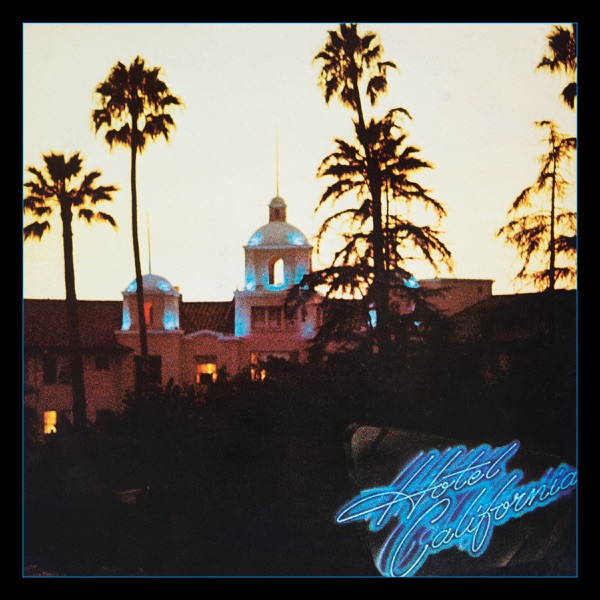
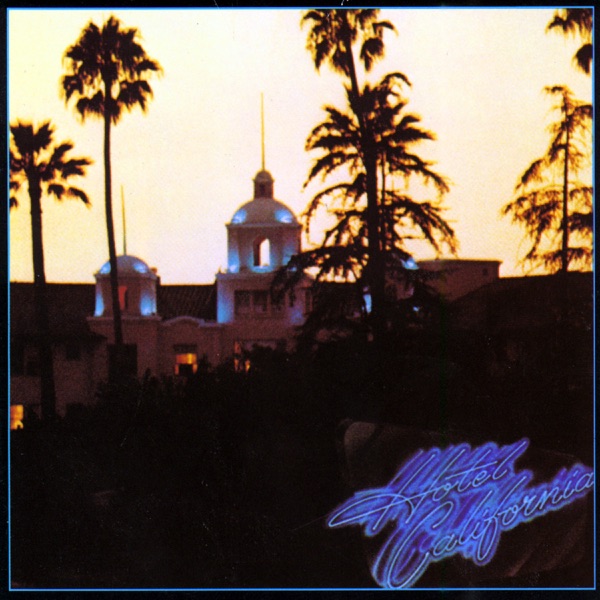
The most sensational claim holds that the album cover features Anton LaVey, founder of the Church of Satan, peering from an upper window of the hotel. This theory has circulated widely online for decades, often presented as established fact. It is not. No primary source supports it. The Eagles have never confirmed any connection to LaVey or to Satanic themes, and band members alongside music historians have consistently rejected the claim. Glenn Frey's own description of the creative approach was notably grounded: the band wanted to "create something strange, just to see if we could do it." That is a statement about artistic ambition, not occult intent. The LaVey theory is a textbook example of pattern-seeking applied to deliberately cryptic imagery, a process that generates compelling stories with zero evidentiary backing.
The Beverly Hills Hotel: Visual Similarity Is Not Confirmation
The pink facade of the Beverly Hills Hotel does bear a recognisable resemblance to the album artwork, which is why this theory has proved so durable. But visual similarity is not confirmation. The Eagles have explicitly stated that no real-world location directly inspired the song. Don Henley described it as "more a state of mind than a physical location," which is about as clear a denial as an artist can offer. Worth noting: the song's original working title was "Mexican Reggae," a reference to the flamenco-influenced chord structure Don Felder developed in his Malibu beach house. That origin story, domestic and practical, sits in sharp contrast to the mythologised readings the song has since attracted.
The Drug Addiction Reading: Plausible, But Unconfirmed
A third popular theory interprets the entire song as a coded allegory for heroin addiction. The imagery does support this reading on the surface: the seductive stranger, the disorienting interior, the inability to escape. However, the band has never confirmed this interpretation. Don Henley has actively discouraged single-interpretation frameworks in multiple public statements, emphasising that the song was designed to address broader themes of excess, narcissism, and the dark underside of the American dream. Treating the addiction reading as the definitive answer replaces one myth with another.
Why Debunking These Theories Actually Matters
Myth-busting here is not about closing the song down; it is about opening it up correctly. The Eagles built ambiguity into the work by design, and every false theory that takes hold displaces the more rewarding complexity the song actually contains. Platforms like MyBesh approach song meaning content with editorial review, grounding analysis in documented band statements and verifiable sources rather than fan speculation. That standard matters because "Hotel California" has generated an enormous volume of interpretive content across YouTube, Reddit, and social platforms, and not all of it distinguishes between a confirmed statement and an imaginative guess. The Songfacts profile for Hotel California illustrates how sourced annotation differs from myth-amplification. When you read the lyrics knowing what the band confirmed and what they left deliberately open, the song rewards you far more than any single theory ever could.
Chart History, Awards, and Streaming Performance
"Hotel California" entered the Billboard Hot 100 in early 1977 and climbed steadily before reaching the summit on May 7, 1977. It held the No. 1 position for one week, which was enough to cement its place in chart history as the Eagles' fourth U.S. chart-topper. The song was also a Top 10 hit in the UK, extending its commercial reach well beyond American radio. What makes this chart performance particularly remarkable is the context: the single ran over six minutes, an unusually long runtime that initially made the label hesitant to release it in full. The Eagles refused to shorten it, and radio embraced it anyway, a sign that the song's atmosphere and structure held listeners in a way that overrode standard commercial logic.
Grammy Recognition and Award Legacy
The critical establishment responded just as strongly as the public did. "Hotel California" won Record of the Year at the 20th Annual Grammy Awards in 1978, one of the most prestigious honors in the recording industry. Notably, the Eagles did not attend the ceremony to accept the award at the time. The Grammy was formally presented to them decades later at the 2016 ceremony, a moment that brought renewed public attention to the song's full cultural arc. The guitar outro has also earned its own accolades independently, ranked No. 8 in Guitar Magazine's Top 100 Guitar Solos and voted the greatest guitar solo of all time by readers of Guitarist magazine.
Streaming and Contemporary Reach
More than four decades after its release, the song's numbers on modern platforms tell a story of sustained relevance rather than nostalgia alone. The official Eagles live 1977 performance on YouTube has surpassed 887 million views, placing it among the most-watched classic rock recordings on the platform. The Polyphonic YouTube video titled "The True Meaning of Hotel California" has accumulated over 2.5 million views as of 2026, a figure that reflects something deeper than passive listening. Audiences are actively seeking to understand the lyrics, not simply replay the melody.
This consistent demand across both streaming and interpretation-focused content points to the same underlying quality that made the song a chart success in 1977: its structural openness. Because the lyrics refuse to resolve into a single meaning, every new listener arrives with fresh questions. Every returning fan finds new angles to explore. That interpretive tension is precisely why the hotel california lyrics remain among the most searched song lyrics across platforms today, and why meaning-focused content around this track continues to grow rather than plateau.
Notable Covers and Cultural Appearances
Few songs have proven as durable or as versatile across cover culture as "Hotel California." The reason lies directly in its construction. Because the lyrics evoke sensation, atmosphere, and psychological entrapment rather than a fixed story with named characters and a specific outcome, artists across virtually every genre can step into the song and make it feel genuinely their own. Songs with highly specific narrative details resist reinterpretation; "Hotel California" invites it.
The Gipsy Kings and the Most Significant Cover on Record
The most culturally impactful cover came from the Gipsy Kings in 1990. Their arrangement opens with the familiar acoustic guitar introduction but immediately transforms it into flamenco style, then accelerates into an uptempo rumba flamenca that moves considerably faster than the original. The lyrics are sung entirely in Spanish, and the vocal delivery carries a forceful, serious quality that pulls the song's themes of entrapment into an entirely different emotional register. The flamenco guitar work retains the essential solo but reframes it within a tradition that emphasizes raw urgency over the original's languid dread. The cover's greatest cultural moment arrived through its placement in the Coen Brothers' film The Big Lebowski in 1998, where it reached an entirely new generation of listeners who had no prior connection to the Eagles' version. That single film appearance demonstrated how powerfully a well-chosen screen placement can extend a song's reach across decades and demographics.
Recent Covers and Generational Reach
Cover activity around "Hotel California" remains vigorous well into 2026. Postmodern Jukebox released a Vintage Havana Style cover featuring vocalist Rogelio Douglas Jr. that has accumulated nearly 800,000 YouTube views, transporting the song into a pre-war Cuban aesthetic that emphasizes warmth and rhythmic playfulness over darkness. Blues and rock guitarists continue recording their own interpretations across social platforms, with individual covers regularly reaching audiences in the hundreds of thousands. These recordings confirm that the song's ambiguity is not a weakness but a structural strength; each arrangement foregrounds a different emotional layer without ever making the original feel violated or diluted.
For listeners who want to explore the full documented range of recordings, the MyBesh covers and versions section for "Hotel California" catalogues interpretations across genres and decades, providing a comprehensive reference for anyone tracing the song's evolving cultural life. The breadth of that discography reflects just how far the song has traveled from its 1977 origins.
The Handwritten Lyrics Controversy
The off-stage history of "Hotel California" includes one of the most unusual legal episodes in classic rock, centered on a criminal trial over handwritten lyric manuscripts that Don Henley alleged were stolen from him. The case, which went to trial in New York in February 2024, involved three defendants accused of wrongfully obtaining and attempting to sell original manuscript pages from the Hotel California album era. These were not printed documents; they were handwritten sheets in Henley's own hand, covering songs from the 1977 album. Auction houses were reportedly involved in the attempted sale of the pages, adding a commercial dimension to what was already a significant cultural dispute. You can follow the full arc of events through AP News's comprehensive case overview, which tracks the proceedings from trial start through resolution.
The criminal charges were ultimately dropped, meaning the case did not result in convictions. Recognizing that criminal proceedings alone had not resolved the ownership question, Henley filed a separate civil lawsuit in June 2024 specifically to regain legal possession of the lyric sheets, demonstrating that artists now frequently pursue both criminal and civil avenues simultaneously when seeking to recover cultural property.
Handwritten manuscripts from canonical songs carry exceptional value precisely because they are singular and irreplaceable. For a song as culturally embedded as "Hotel California," an original lyric sheet represents direct physical evidence of the creative process itself. That commercial reality helps explain why the dispute attracted the level of legal attention it did, and why it reflects broader industry tensions around provenance, memorabilia ownership, and the responsibilities of dealers and auction houses.
The controversy adds yet another dimension to the song's already layered history, illustrating that "Hotel California" continues to generate significant cultural weight far beyond its runtime.
Hotel California in Context: The Album and the 1976 Sound
Released on December 8, 1976, Hotel California was the Eagles' fifth studio album and a deliberate turning point in the band's identity. The departure of founding guitarist Bernie Leadon, whose bluegrass and country sensibility had defined the band's earlier sound, and his replacement by hard-rock veteran Joe Walsh, reshaped everything from the album's guitar tones to its emotional register. As one widely cited description puts it, the record was where the Eagles "expunged any lingering trace of their country-rock roots and took up residence in the football stadiums of the world." This was not a drift or an accident; it was a documented, conscious shift toward something darker, bigger, and more ambitious.
That shift aligned perfectly with the cultural moment. The mid-1970s in Los Angeles carried a specific atmosphere: the optimism of the 1960s counterculture had curdled, post-Vietnam disillusionment had settled into the national mood, and the music industry had grown into a dominant cultural force with its own gravitational pull, drawing talent toward California and then consuming it. Don Henley described the album as using California as "a microcosm of America," offering what he called "an extremely pessimistic history of America." The timing was pointed. Because 1976 was the U.S. Bicentennial year, and because the eagle is the American national symbol, Henley noted the band "felt obliged to make some kind of artistic statement." California was simultaneously the promised land and the place where promises unravelled.
Don Felder developed the song's core melody at his Malibu beach house, working from a riff he described as aiming for a mystical, almost twilight atmosphere. That quality of unease and wonder, a feeling of arriving somewhere beautiful that might not let you leave, captures the cultural mood of 1976 with precision.
The title track functions as the album's opening argument, but the surrounding songs extend that argument into a near-concept record. "New Kid in Town" dissects the disposability of fame. "Life in the Fast Lane" dramatises Hollywood hedonism and its self-destruction. "Wasted Time" turns inward toward personal loss inside a machine of excess. "The Last Resort," the album's closing track, delivers what critics have described as a sweeping indictment of capitalism and the exhausted American dream. Each song reinforces what the title track introduces: arrival, seduction, entrapment, and the impossibility of escape.
For readers who want to explore this further, the Eagles artist page on MyBesh and the Hotel California album page on MyBesh offer expanded context, full tracklists, and deeper editorial analysis. The lyrics you have been reading are not a standalone artefact; they are an entry point into one of rock's most coherent and sustained artistic statements.
Why Hotel California Still Demands to Be Understood
"Hotel California" endures not by accident but by design. Every layer of the song, the chords, the imagery, the deliberately unresolved final line, was built to resist a single reading and reward repeated attention. That structural ambiguity is the precise reason it still generates millions of interpretation searches nearly five decades after release. The song does not offer answers; it offers a mirror.
Don Henley's own words remain the most reliable anchor point. The song was always about America, about excess, narcissism, and the seductive trap at the heart of the American Dream. Anchoring your understanding in that stated intent does not close the conversation; it opens a more honest one.
03 · Lyrics
"Hotel California"
On a dark desert highway
Cool wind in my hair
Warm smell of colitas
Rising up through the air
Up ahead in the distance
I saw a shimmering light
My head grew heavy and my sight grew dim
I had to stop for the night
There she stood in the doorway
I heard the mission bell
And I was thinking to myself
"This could be Heaven or this could be Hell"
Then she lit up a candle
And she showed me the way
There were voices down the corridor
I thought I heard them say
Welcome to the Hotel California
Such a lovely place (such a lovely place)
Such a lovely face
Plenty of room at the Hotel California
Any time of year (any time of year)
You can find it here
Her mind is Tiffany-twisted
She got the Mercedes Benz
She got a lot of pretty, pretty boys
That she calls friends
How they dance in the courtyard
Sweet summer sweat
Some dance to remember
Some dance to forget
So I called up the Captain
"Please bring me my wine"
He said, 'We haven't had that spirit here
Since 1969"
And still those voices are calling from far away
Wake you up in the middle of the night
Just to hear them say
Welcome to the Hotel California
Such a lovely place (such a lovely place)
Such a lovely face
They livin' it up at the Hotel California
What a nice surprise (what a nice surprise)
Bring your alibis
Mirrors on the ceiling
The pink champagne on ice
And she said, 'We are all just prisoners here
Of our own device"
And in the master's chambers
They gathered for the feast
They stab it with their steely knives
But they just can't kill the beast
Last thing I remember, I was
Running for the door
I had to find the passage back
To the place I was before
"Relax," said the night man
"We are programmed to receive
You can check out any time you like
But you can never leave"
Lyrics via Google. Copyright belongs to rights holders.
04 · FAQ