
30-sec preview
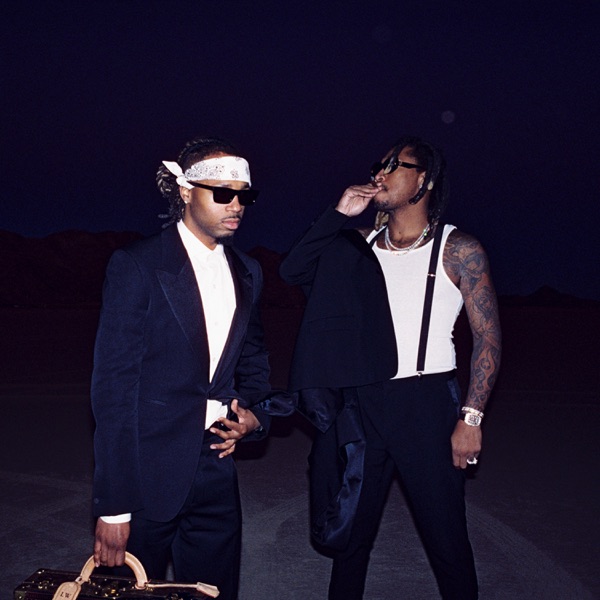
2024 · From the album WE DON'T TRUST YOU
Like That
by Future, Metro Boomin, Travis Scott & Playboi Carti
The reading
A first-person plunge into a queer fetish party where the narrator treats the scene as both liberation from inherited norms and a controlled demolition of the self
02 · Interpretation
Inside the velvet cell: reading 'Like That' as a manifesto of consensual chaos
The lyrics provided here do not match the Future, Metro Boomin, Travis Scott and Playboi Carti track most listeners associate with the title 'Like That' from WE DON'T TRUST YOU. What we have instead reads like a first-person travelogue through a queer fetish party, narrated by someone who treats the scene as both sanctuary and demolition site. Taken on its own terms, the song is a refusal anthem dressed as a confession.
The setting
The opening grounds us in time and chemistry: a quarter to four in the morning, poppers, an attraction the speaker doesn't intend to negotiate. The invitation to be slapped "like that snare" makes percussion and flesh interchangeable, and it sets the song's central conceit: the body as instrument, struck on the beat. From there the location resolves into a "velvet cell" with a green neon sign reading "Welcome to Hell" and Radiohead's A Moon Shaped Pool on the speakers. The reference is a tell. This is not a club banger soundtrack; it's the sound of slow grief and orchestral dread, which reframes the room as a place where pleasure and mourning sit on the same couch.
The crowd as fairy tale
The middle verses turn the party into a storybook. There's a "school of magic, with brooms and wands," pairs tugging at each other like dogs over a bone, a "house of slithering," and a floor full of "happy wizards scissoring." The whimsy is deliberate. By rendering group sex in the vocabulary of children's fantasy, the song refuses the shame frame that mainstream culture would impose on the same scene. It is silly, communal, and unembarrassed, and that tone is the argument.
The refusal
Twice the speaker says they don't subscribe to your cultural norms and that their church's doctrine has lost its charm. Those two lines are the song's thesis. What follows them is a deliberate inversion of a sacred phrase: "Family matters, I couldn't agree more / This is my family fisting me on the floor." The pun on "family" rewrites kinship as chosen, physical, and queer. The biological family that might be invoked by a politician or a pastor is replaced by the people in the room.
Loss of language
In the final stretch the speaker reports that "regret" is their safe word and that they have to count one to ten in Japanese to keep track. Counting in a second language is a recognisable trick for staying present under intensity, and the Japanese numerals (ichi, ni, san and onward) actually appear, with a whispered aside that translates roughly as an offer to hit them like that snare from earlier. The motif from verse one returns as a callback, tying the night together. The carpet burning the speaker's knees is the only injury named plainly, and it lands without complaint.
The chant
The song closes by abandoning narrative for slogan. "We are dangerous teenagers" repeats, then "Fuck you, I'll do what I want to do" repeats four times. The shift from first-person singular to plural matters. The speaker stops being a tourist in the scene and joins a we. The teenage framing is pointed, since the activities described are explicitly adult; the word teenager is being reclaimed for the posture of refusal, not for the age. It is the sound of someone who was told no for a long time saying no back.
Why it lands
What keeps the track from being mere provocation is the care taken with detail: the specific Radiohead album, the specific safe word, the specific counting system, the specific neon sign. These are the receipts of a real night, or a convincing fiction of one. The song works because it treats a scene that pop music usually sensationalises as ordinary enough to describe in passing, and treats the rejection of inherited doctrine as something already accomplished rather than something still being argued.
Themes catalogued
03 · Lyrics
"Like That"
I'm at the door at a quarter to four
Poppers popping, baby, might take some more
I'm fucking loose, you're gorgeous, I don't care
Come closer, baby, slap me like that snare
'Moon Shaped Pool' plays in the velvet cell
Green neon sign reading "Welcome to Hell"
Leather slings fall like oxygen masks
We're going down, fuck my life in half
School of magic, with brooms and wands
Pairs of people tugging like hungry dogs
For bone, baby, in the house of slithering
Floor full of happy wizards scissoring
I don't subscribe to your cultural norms
My church's doctrine has lost its charm
Rise above the gloom of the jungle floor
Hit me like that snare, more, more, more
I don't subscribe to your cultural norms
My church's doctrine has lost its charm
Family matters, I couldn't agree more
This is my family fisting me on the floor
Regret my safe word, one to ten in Japanese
At the party, carpet burning my knees
Na, na, na, na, na, na, na, na, na, na, na, na
(Ichi, ni, san, shi, go, roku, nana, hachi, kyu, jyuu)
Ichi, ni, san, go, roku, nana, hachi, kyu, jyuu
Ichi, ni, san, go, roku, nana, hachi, kyu, jyuu
(Nē, sakki no sunea mitai ni aterushi, hoshī? Ji yaa sou suruwa)
We are dangerous teenagers
We are dangerous teenagers
Fuck you, I'll do what I want to do
Fuck you, I'll do what I want to do
Fuck you, I'll do what I want to do
Fuck you, I'll do what I want to do
Lyrics via Google. Copyright belongs to rights holders.
04 · FAQ
Frequently asked
What does the line 'slap me like that snare' mean in 'Like That'?
Why does 'Like That' reference Radiohead's 'A Moon Shaped Pool'?
What does 'This is my family fisting me on the floor' mean?
Why does the narrator count to ten in Japanese in 'Like That'?
Who are the 'dangerous teenagers' chanted at the end of 'Like That'?
Is 'Like That' actually the Future and Metro Boomin song from 'WE DON'T TRUST YOU'?
What is the role of religious imagery in 'Like That'?
05 · Discography