30-sec preview
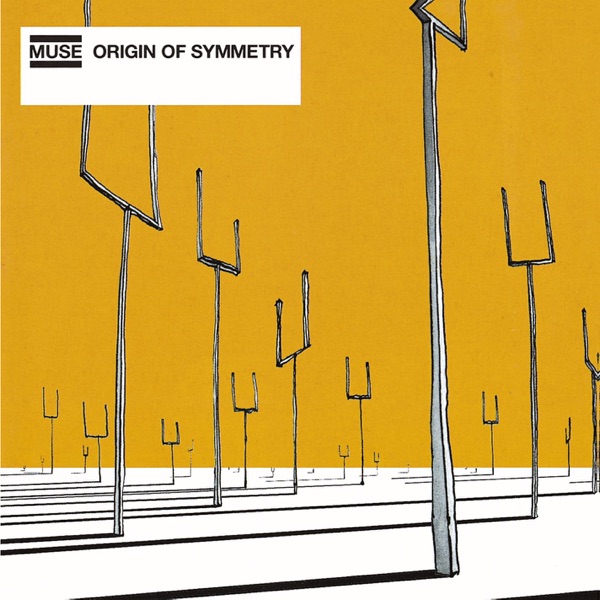
2001 · From the album Origin Of Symmetry
Plug In Baby
by Muse
The reading
A breakup song dressed as science fiction, in which a lover is traded for a machine that delivers what human intimacy could not
02 · Interpretation
Plug In Baby: Muse's Science-Fiction Breakup Anthem
Muse's second album, Origin of Symmetry, arrived in the summer of 2001 with the band sharpening the operatic alt-rock of their debut into something stranger and more aggressive. Plug In Baby, its lead single, became the song that defined them for a generation of listeners: a riff that sounds like a Bach toccata wired into a faulty amplifier, sung by a man who has decided that flesh is no longer worth the trouble.
The one-line conceit is simple. A relationship has collapsed under the weight of dishonesty, and the narrator replaces the human partner with a machine. Read straight, it is a breakup song. Read sideways, it is one of the earliest pop-rock dispatches from the territory the 2000s would obsess over: intimacy mediated, augmented, or replaced by technology.
Exposure, then disposal
The opening verse is an accusation and a verdict in four lines. The narrator says he has exposed his partner's lies and found that what lay beneath was no shock at all. The disappointment is double: he was deceived, and the deception was not even interesting. From this he moves immediately to a programme of action, changing and cleansing in order to forget. The language is closer to system maintenance than mourning, which is the tonal hinge the chorus will swing on.
The machine in the chorus
The chorus introduces the title figure, a "plug in baby" who carries out the functions a lover used to. She crucifies his enemies when he is tired of giving, and she lives, or fails to live, in "unbroken virgin realities." The phrase is doing a lot of work. It suggests pristine simulated worlds, untouched by the contamination of the actual relationship he is fleeing. It also picks up the religious register of "crucifies," turning the device into something between a saviour and a sex doll. Muse rarely shy from grandiosity, and the chorus deliberately overloads the imagery: salvation, violence, virginity, exhaustion, all in six lines.
The line "is tired of living" is worth pausing on. The machine inherits the narrator's fatigue. Whatever he plugs in is not a fresh start so much as a vessel for the same weariness, which complicates any reading of the song as straightforward technophilia.
The second verse: a warning
Between choruses the narrator turns back to the ex-lover with a brief threat. She is told not to be confused, that she is going to lose her own game, and he asks to be changed and to have the "envying" replaced. It is the closest the song comes to admitting that part of what he wants the machine for is to stop wanting her. The cure for jealousy is to feel nothing, and the plug-in promises exactly that.
The outro abandons argument for a flat summary. He has seen her loving, his is gone, he has been in trouble. The song deflates from its baroque chorus into something much smaller and more bruised, which may be the most honest moment in it.
Why it endures
Plug In Baby works because the riff and the lyric are saying the same thing in different languages. Both are mechanical, repetitive, and slightly hysterical. Bellamy's falsetto sits on top like a warning light. The song arrived just as the internet was becoming the default medium for relationships, and its central image, of swapping a person for a device that performs the person's role more reliably, has only become easier to recognise in the decades since.
It is also, simply, one of the most efficient three-and-a-half minutes in early-2000s British rock. The song does not develop so much as accumulate intensity, and it earns its scale because the underlying premise, that heartbreak might be solved by hardware, is both ridiculous and, in certain moods, tempting.
Themes catalogued
03 · Lyrics
"Plug In Baby"
I've exposed your lies, baby
The underneath's no big surprise
And now it's time for changing
And cleansing everything
To forget your love
My plug in baby
Crucifies my enemies
When I'm tired of giving, whoa
My plug in baby
In unbroken virgin realities
Is tired of living, ooh
Don't confuse
Baby, you're gonna lose your own game
Change me, replace the envying
To forget your love
My plug in baby
Crucifies my enemies
When I'm tired of giving, whoa
My plug in baby
In unbroken virgin realities
Is tired of living, ooh
And I've seen your loving
Mine is gone
And I've been in trouble
Whoa
Lyrics via Google. Copyright belongs to rights holders.
04 · FAQ
Frequently asked
What does "plug in baby" actually refer to in the Muse song?
What does the line about "unbroken virgin realities" mean in Plug In Baby?
Where does the Plug In Baby riff come from?
Is Plug In Baby about a real breakup?
How does Plug In Baby fit into the album Origin Of Symmetry?
Why is the machine "tired of living" in Plug In Baby?
Why has Plug In Baby remained a fan favourite at Muse concerts?
05 · Discography