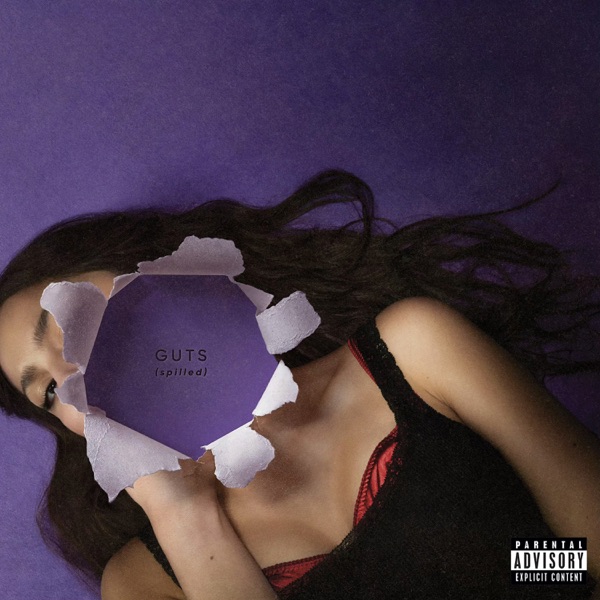

30-sec preview
2026 · From the album GUTS
track 2
The reading
A defense of private faith against public judgment, framed as a vow to keep moving toward something higher
02 · Interpretation
Faith on Her Own Terms: Reading Olivia Rodrigo's 'track 2'
The most surprising thing about 'track 2' is how it begins: not with a hook, but with a testimony. A voice explains the need to make a record that thanks Jesus Christ, acknowledges the critics who mock the kind of music being made, and lands on a simple claim, that when friends fall away, God is the one who listens without complaint. It is an unusual opening for a pop record, and it sets the terms of everything that follows.
What the song seems to be doing is staking out a position: faith is real here, but it is not tidy, and it is not for public consumption. The pre-chorus turns directly to the listener with a plea against judgment. She is not perfect, and she may not be in church on Sunday, but neither of those facts is meant to be evidence against her belief. It is a defense mounted before the accusation is even fully spoken, which suggests the accusation is one she has heard often.
The spoken intro as thesis
By front-loading the record with a monologue rather than a melody, the track signals that the point is doctrinal before it is musical. The framing, that critics attack the kind of music she sings but cannot touch what she believes, draws a line between art and interior life. Public work is fair game; private faith is not. It is a distinction pop stars rarely bother to make out loud, and making it out loud is part of the song's argument.
The line about friends who forsake her and a God who listens without complaining leans on a very old gospel logic: human relationships fail, divine ones do not. Coming from an artist whose earlier catalogue has dwelt at length on friends turning, exes lying, and social betrayal, the sentiment reads less like a sermon and more like a conclusion she has arrived at through exhaustion.
The chorus as forward motion
After the plea, the song shifts into a repeated chant about moving on, pressing on, going the other way and to higher ground. The phrasing borrows directly from hymn tradition; 'higher ground' and 'pressing on' are lifted straight out of the vocabulary of American church music. She does not translate them into secular language. She lets them sit.
What these lines accomplish, structurally, is release. The verses are defensive, addressed outward to a judging audience. The chorus is directional, addressed to no one but herself. The repetition, with call-and-response echoes tucked in the parentheses, mimics the way a congregation might reinforce a soloist. Whether or not the production leans into gospel textures, the shape of the writing is gospel-shaped.
Context on GUTS and the pivot
GUTS, on its earlier tracks, established Rodrigo as a chronicler of adolescent rage, embarrassment, and heartbreak. 'track 2' reads as a different kind of confession, one about belief rather than about a boy. Placed second on the record, it could be heard as a mission statement: before we get into the mess of everything else, here is what actually holds me up.
The genre tags attached to the song, pop and indie rock alongside 'sad,' hint at a production that keeps the spiritual content grounded in the same emotional register as the rest of her work. This is not a worship record. It is a pop song that admits worship is happening in the background of a life that also contains all the other things her songs are about.
Why it lands
'track 2' matters because it refuses two easy scripts. It does not perform the sanitized Christianity of a crossover artist trying to reassure a religious audience, and it does not perform the rejection of religion that pop convention often expects from young women artists. It asks not to be judged for being imperfect and not to be judged for skipping church, and then it moves on. That refusal, quiet as it is, may be the point of the whole song.
Themes catalogued
03 · Lyrics
"track 2"
See, I had to make a record that
Gave thanks to my Lord Savior and Jesus Christ
A lot of people are quick to criticize me for the kind of music I sing, but
See, that don't change the belief that I have in God
You know what I'm saying?
'Cause when my friends forsake me
Who's there to listen to me without complaining?
Nobody but him
Uhh
Please don't judge me
'Cause I'm not perfect
I'm not perfect
And please don't judge me
If I'm not in church on Sunday
I'm moving
I'm moving on and (and I'm pressing)
I'm pressing on (to the other way)
To the other way and
To higher ground
I'm pressing
I'm moving on and (I'm moving)
I'm pressing on to that
To the other way and
To higher ground and
Lyrics via Google. Copyright belongs to rights holders.
04 · FAQ
Frequently asked
What does the spoken intro to 'track 2' mean?
Is 'track 2' by Olivia Rodrigo a Christian song?
What does 'higher ground' mean in the chorus?
Why does Olivia Rodrigo say 'please don't judge me' in 'track 2'?
How does 'track 2' fit on the GUTS album?
What hymn is 'track 2' referencing?
Who is the 'him' Olivia Rodrigo mentions in the intro of 'track 2'?
05 · Discography